Blog · 2026-10-22
Designing a vinyl figure for your brand
A vinyl figure is a sculpt, a paint master, a mold, and a box. The file you send decides how much of that can be faithful.
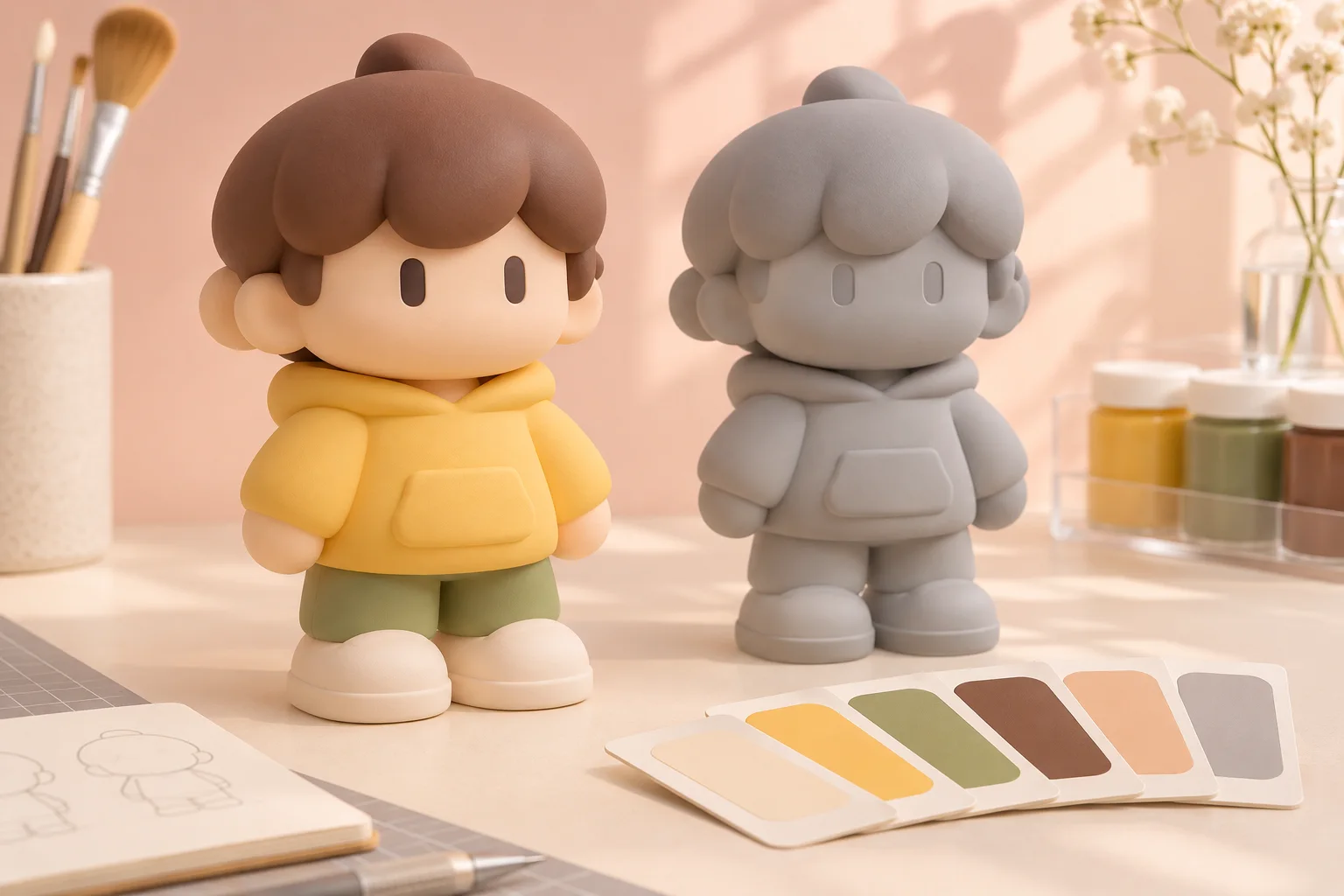
A vinyl figure looks simple when it is finished: a small character, a few colors, a box. The path to that object is a sequence of approvals. Skip one, and the bulk will not match the picture you sold internally. This note is the sequence we use for vinyl designer figures, whether you start from a character you own or from a direction you saw on the capabilities page.
Start with the rights and the picture
Send flat artwork: a front, a side if you have one, and a note about the back. Color callouts matter. A mood image is useful. A single blurry screenshot is not a sculpt brief. If the character is yours, say so. If it is a mascot you commissioned, send the file you are allowed to manufacture. If it is someone else's character, we will not develop it.
Say what the figure is for. A blind-box collectible, a gift-with-purchase, and a desk mascot ask for different scales of detail. We will not lock a size on this page. The quotation will name a size once the sculpt is understood. Until then, describe the size the way a person would hold it.
From artwork to sculpt
The sculpt is a three-dimensional interpretation, not a tracing. Hair, hoods, and thin accessories that look light in a drawing can be fragile in vinyl. We will flag a part that should be thickened, combined, or turned into a separate accessory. That conversation is design, not a refusal.
You should see the sculpt, as a render or as a physical prototype, before paint is discussed as final. Approving a front view and being surprised by the side is a common and avoidable problem. Ask for the angle you are worried about. We would rather resculpt a shoulder than repaint a thousand figures.
Paint master, then mold
The paint master is the color reference. It shows which areas are sprayed, which are masked, and which edges are allowed to be soft. A glossy eye and a matte body are different operations. If a color is a brand color, send a reference we can match against, and accept that a plastic surface will not look identical to a printed swatch under every light.
The mold comes after the sculpt and the paint logic are approved. A change to the sculpt after the mold exists is a different and heavier kind of change. Treat mold approval as a door. Do not plan to 'fix the hat in production.' Production repeats the mold.
What you receive, and what you check
The prototype or the paint master is the sample that matters. Check the silhouette, the paint breaks, the stability when it stands, and the way it sits in the tray. A figure that leans in the tray will arrive leaning. The pack has to be designed around the approved figure, not around the first sketch. The packaging note is here: custom packaging.
Bulk is compared with the approved master, not with your memory of the drawing. If you want a test report for the market you sell into, ask before bulk. We arrange testing when you request it. We do not claim a certificate on the figure by default. Read the plain version in toy safety testing for export.
When the artwork is ready, or when you only have a rough mascot and a market, send the brief. Include who owns the character. That single sentence saves the longest delays.
Expect the conversation to move in passes: artwork, sculpt, paint, mold, then packed sample. Each pass is a chance to stop. Approving a pass means the next one may be built. If your team needs time for an internal review, build that into your own plan rather than assuming the workshop is waiting with an empty schedule. We will tell you what the next pass needs from you. Send that, and only that, so the file does not become a folder of conflicting versions.
Name a single contact for comments. Conflicting markups from three people, sent on different days, will be read as three briefs. Collect them, decide, and send one note. If a comment contradicts the approved sculpt, say whether the sculpt approval is withdrawn. Silence will be read as 'continue.' That is the kind reading, and it is also how unwanted details survive into the mold.